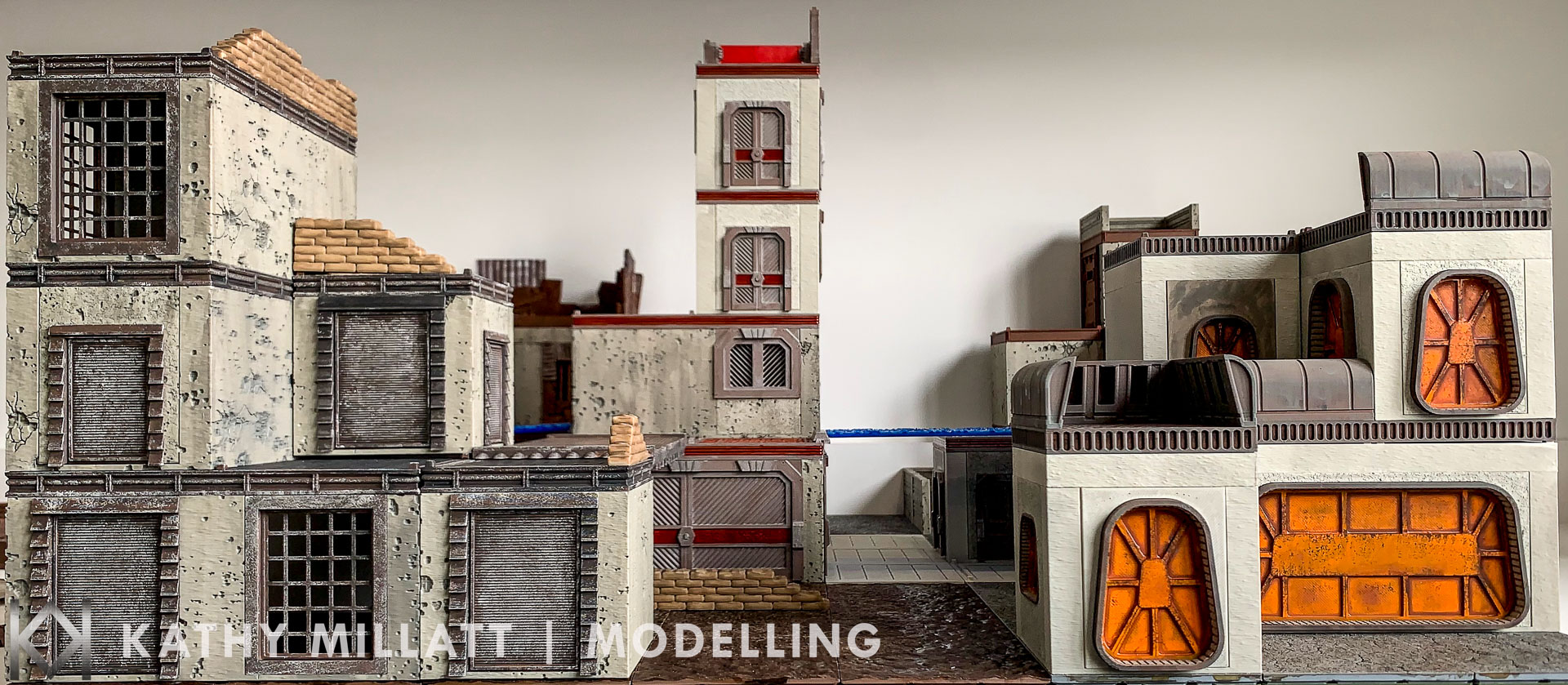
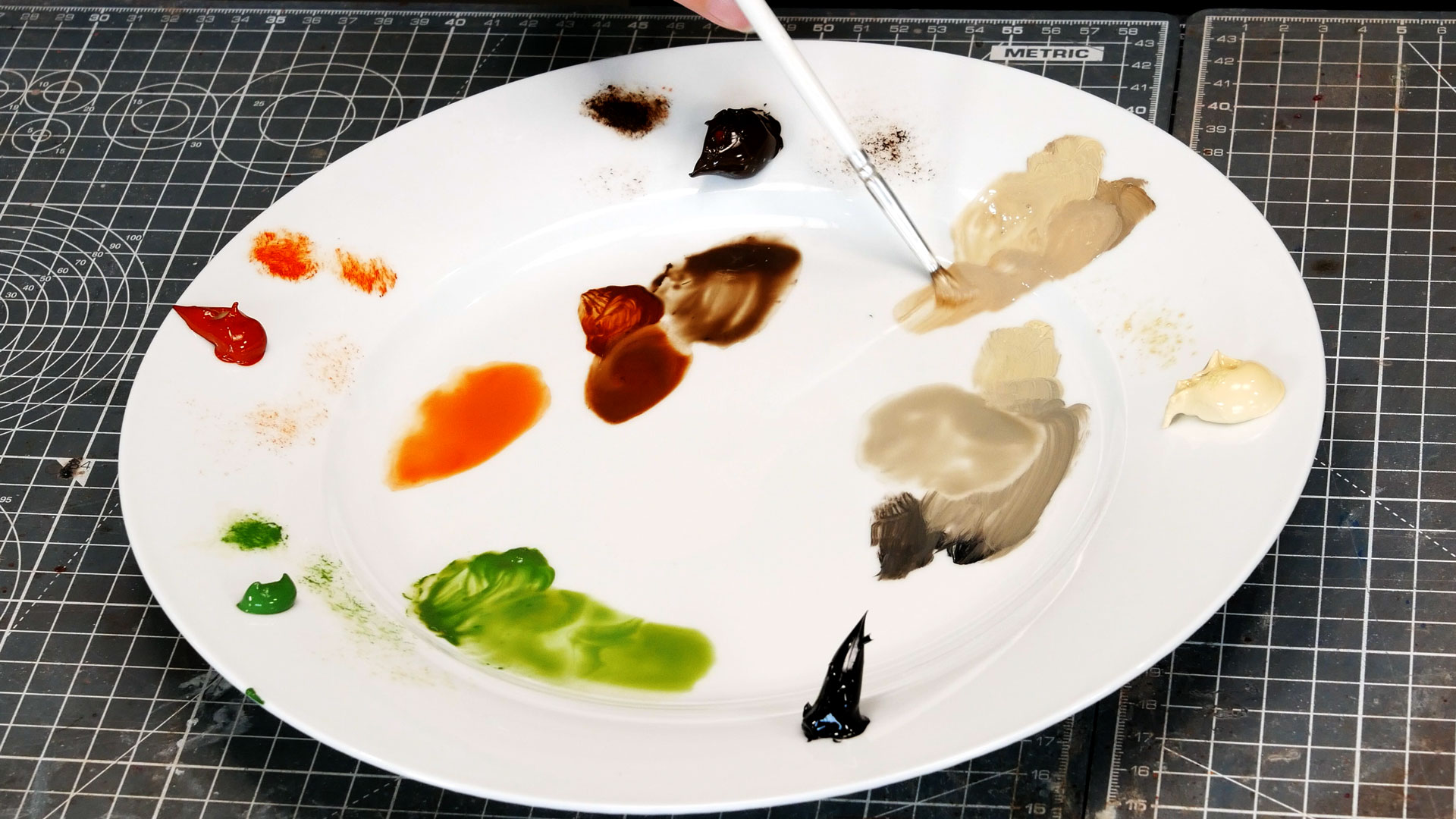
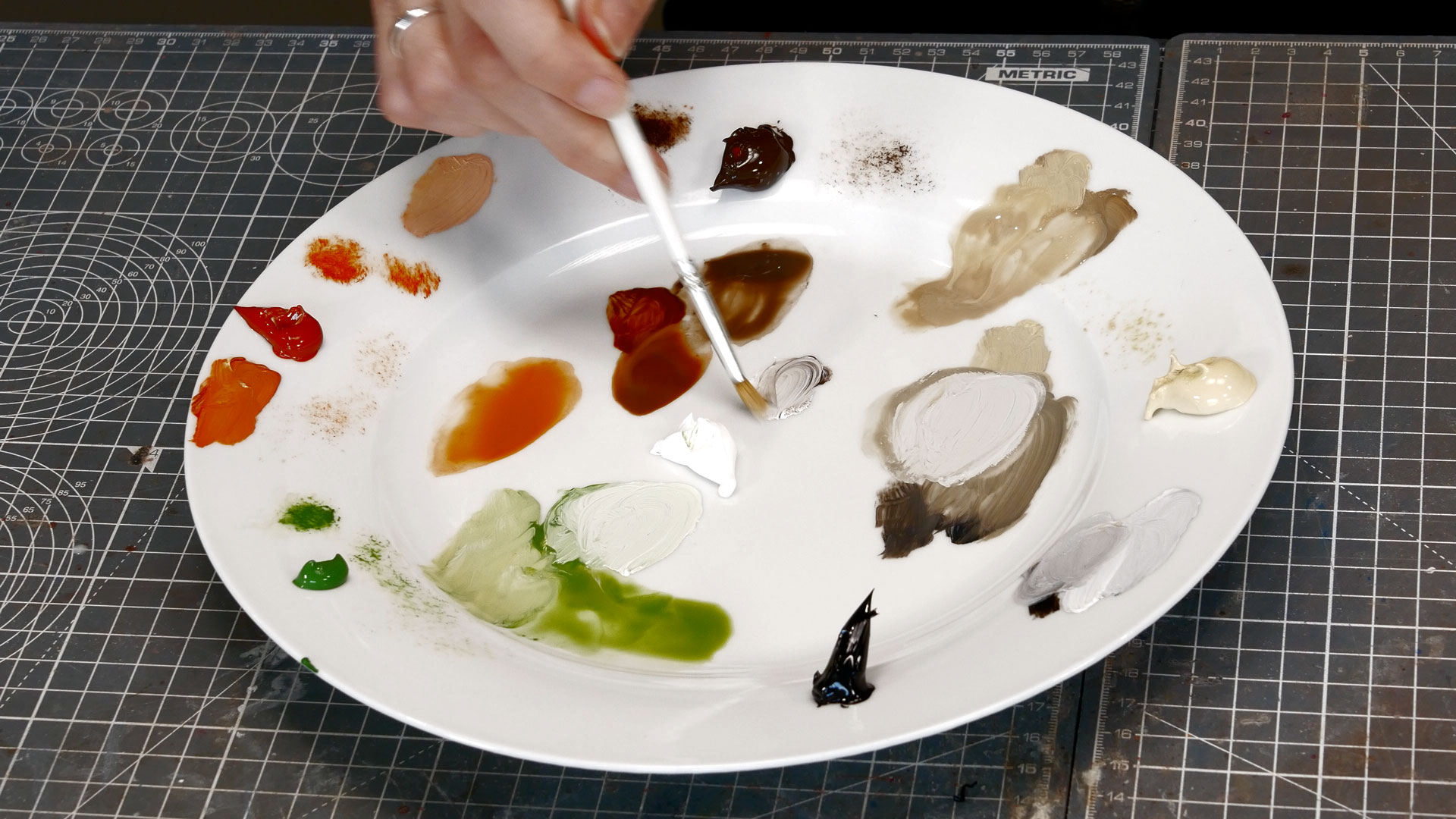
Let’s be honest—I’ve got shelves and shelves of paint. Rows of bottles, tubes, and pots that make my workspace look like an art shop exploded. But when it comes to weathering terrain, I only reach for five colours consistently:
- Raw Umber
- Burnt Sienna
- Buff Titanium (sometimes labelled as “Natural”)
- Sap Green
- Black
No white, you ask? We’ll get to that later.
What I Use Each Colour For
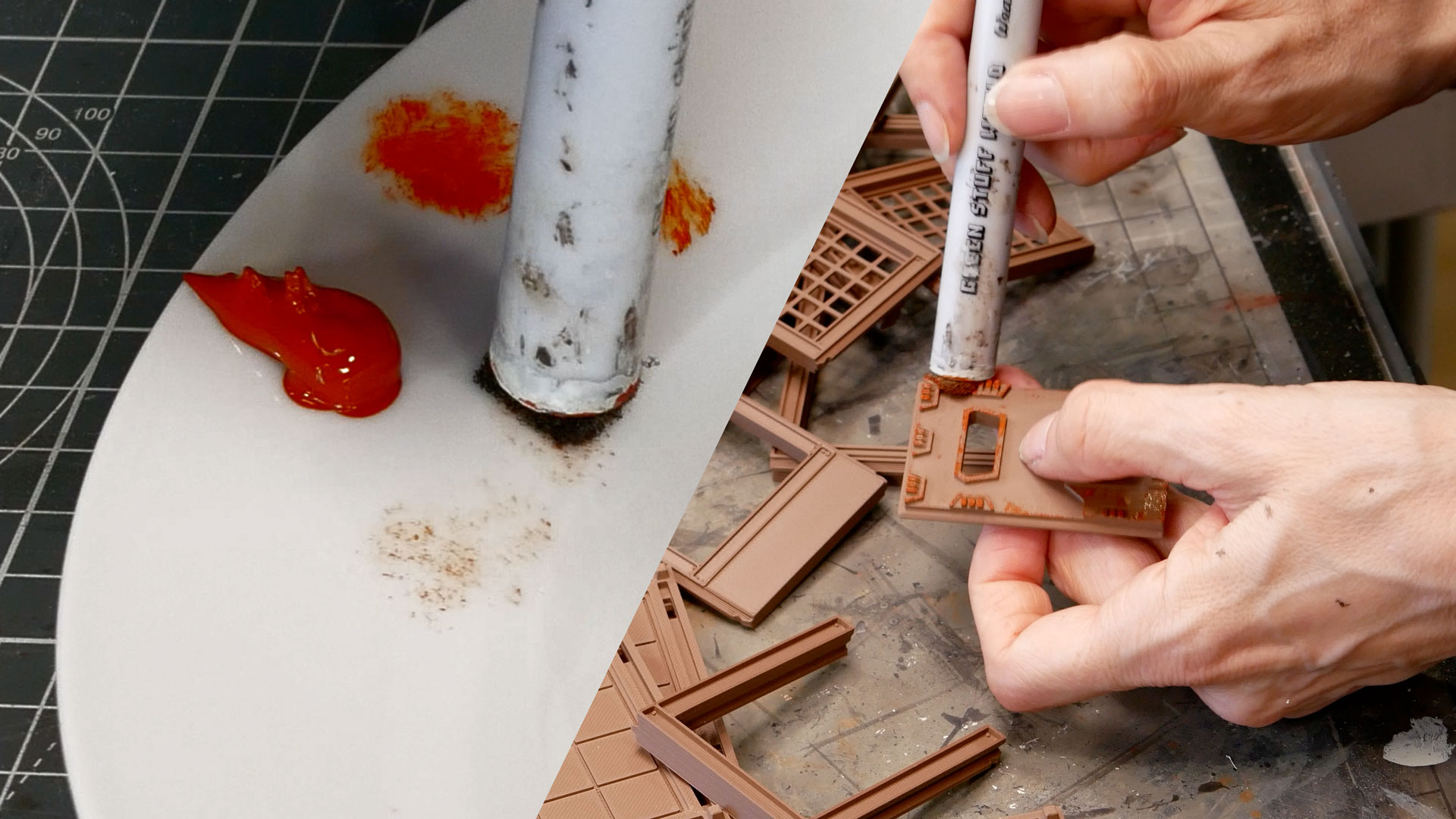
Burnt Sienna
This is my go-to rust colour. It’s got that deeper, aged rust tone that feels natural. I dab it on with a sponge to create specks and spots of corrosion—especially around edges and wear points.
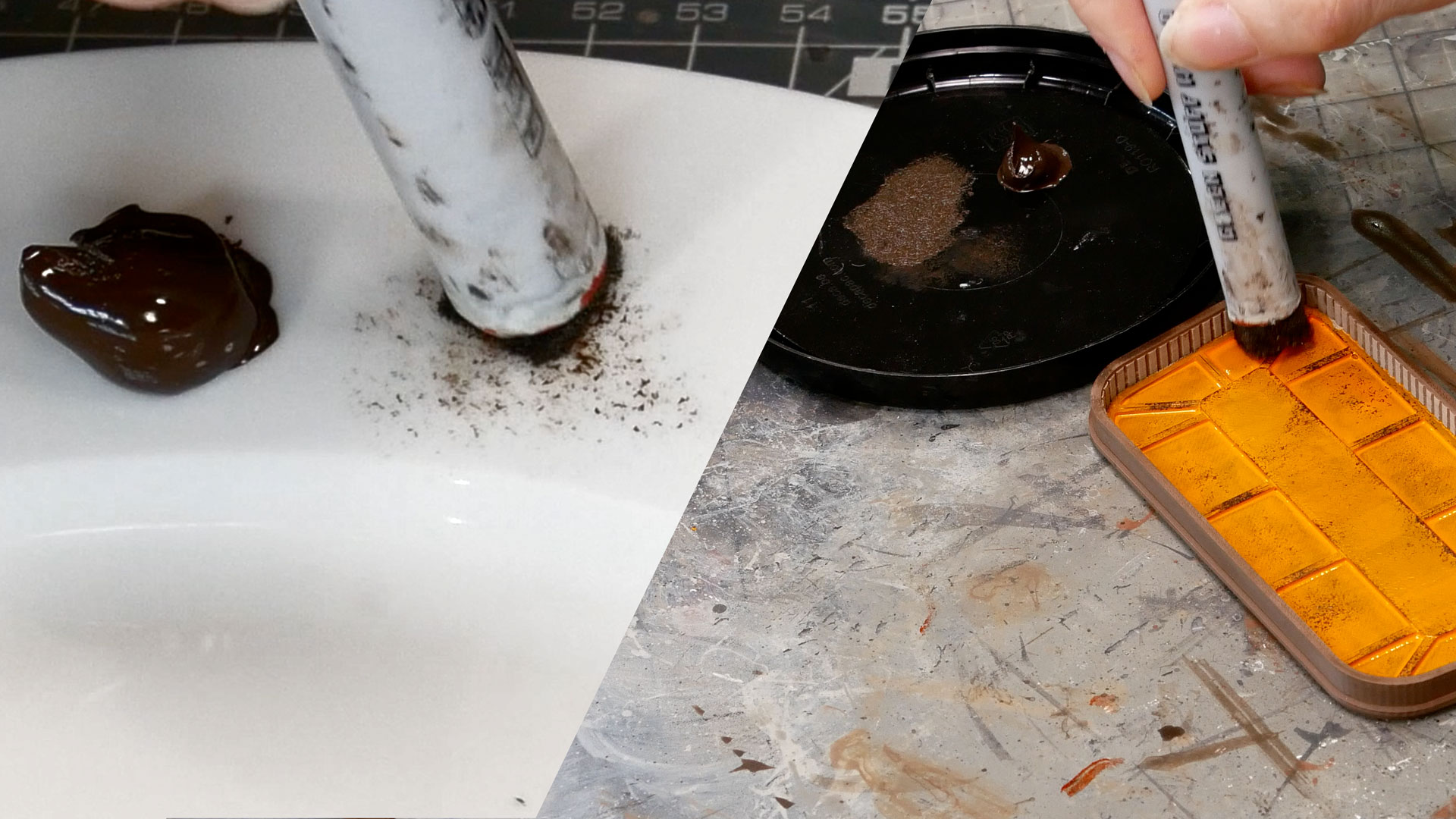
Raw Umber
If I had to pick a favourite, this would be it. Raw umber gives you that grimy, worn-down feel—perfect for old metal, dirt build-up, or general decay. Dab it on with a sponge, thin it into a wash, layer it—it’s incredibly versatile.
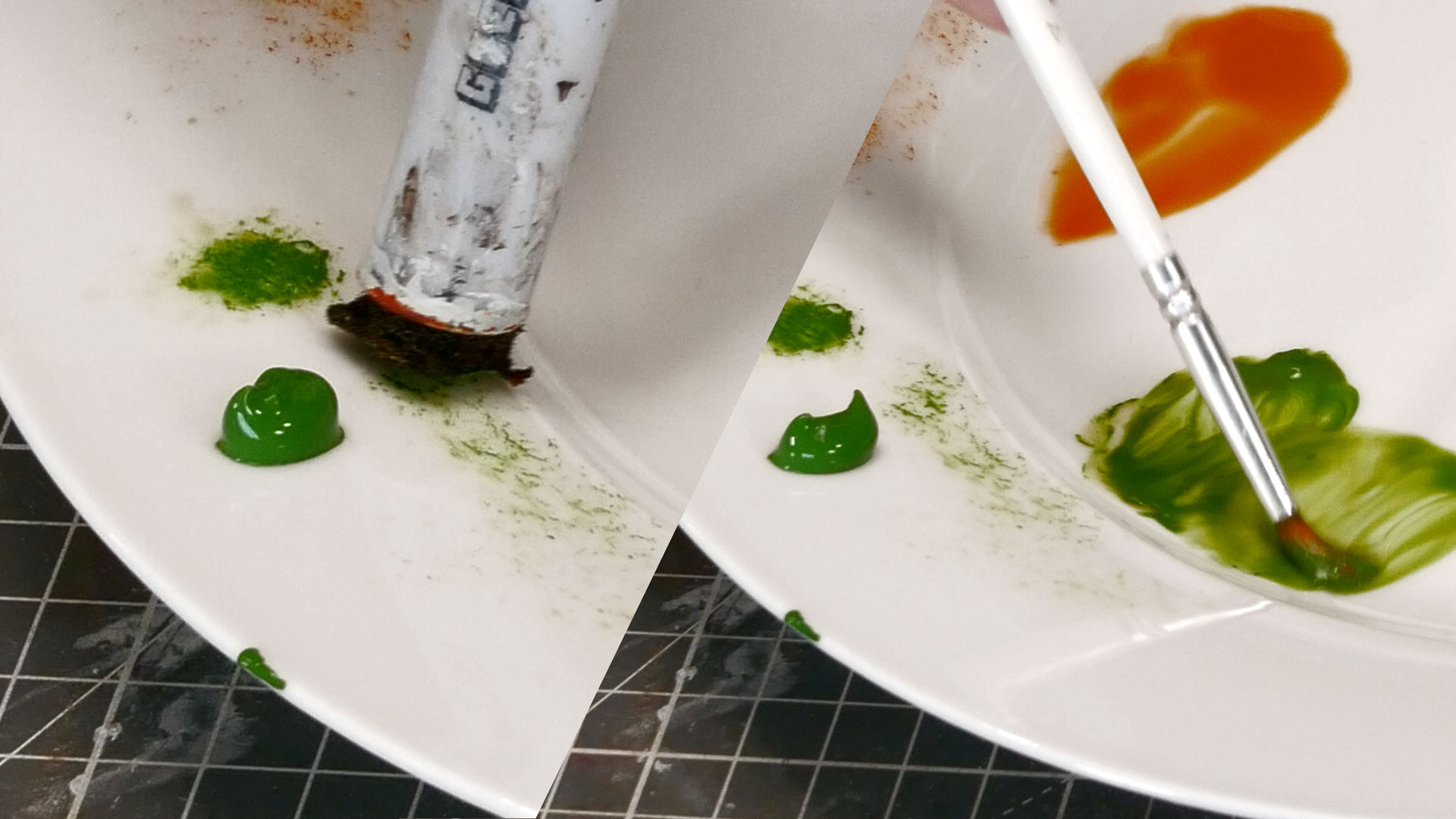
Sap Green (or Chrome Green Tint)
This one’s for moss, lichen, or anything overgrown. I’ll admit, I don’t use it often—sci-fi spaceships aren’t exactly teeming with greenery. But when I do need it, nothing else quite works.
Buff Titanium / Natural
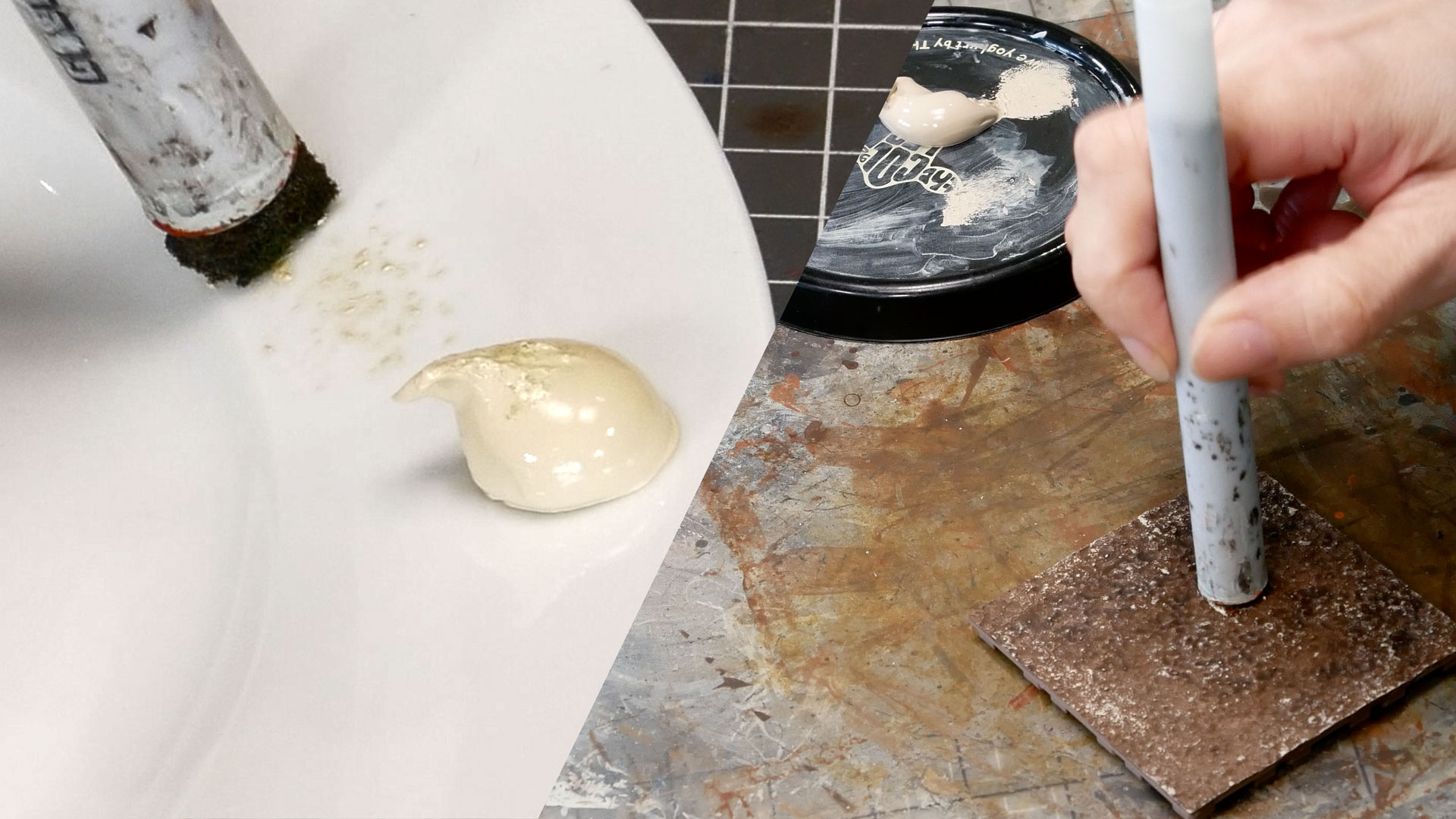
Buff titanium is my secret weapon. I sponge it onto ground pieces to create a dusty, aged concrete look. It also happens to be the key to unlocking better mixes—especially when you want warm greys or more natural tones.
Black
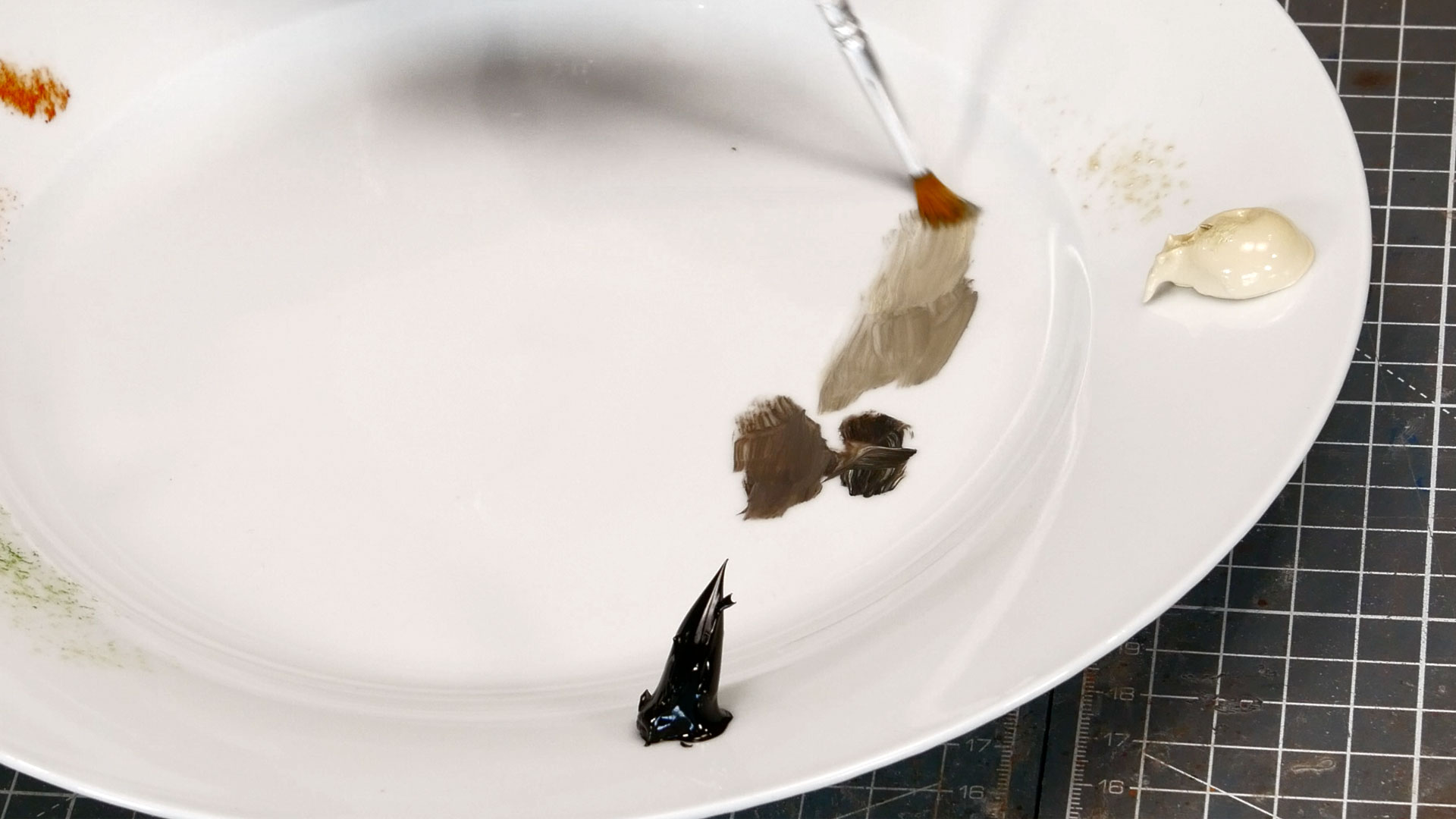
Here’s the thing about black: I never use it straight. Even the deepest shadow in real life isn’t truly black. Instead, I mix it with buff titanium or another tone to create a more natural, dusty grey. Starting with a lighter colour and darkening it works better than trying to lighten pure black. That way, you’re not wasting paint trying to tame it.
Mixing, Washing, and Layering
Now is a good time to remind you to thin your paints. If you use these artist acrylics straight out of the tube, you’re going to see brush strokes. But add a little water, and the magic really starts to happen.
Want a good concrete wash? Start with buff titanium and thin it down. Need a more rusted look? Mix burnt sienna with a touch of raw umber. Sap green makes a great grimy wash for anything slimy or swampy.
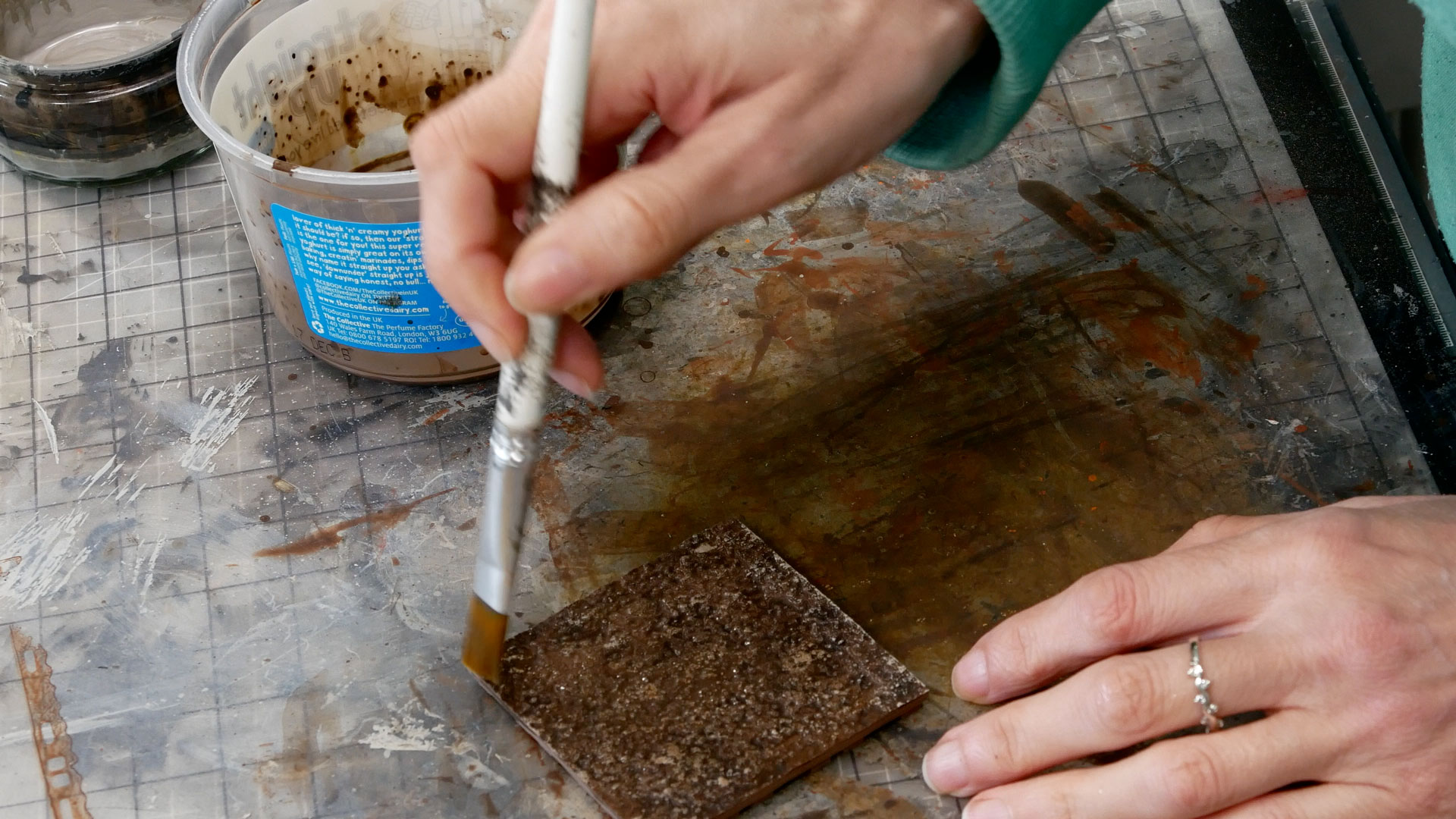
One of my favourite combos is layering a raw umber wash over sponge-applied buff titanium—it gives you a mellow, realistic texture. And of course, you can mix these core colours to create even more nuanced effects. Burnt sienna and raw umber together? A rich, dark rust wash that’s incredibly convincing.
So… What’s the Deal with White?
Here’s the deal: white is like black. Use it sparingly.
If I mix buff titanium into burnt sienna, I get a warm, believable tone—nothing too bold, but useful. Mix white into burnt sienna though? I get something that looks like peach yoghurt. Not what you want on a rusty old blast door.
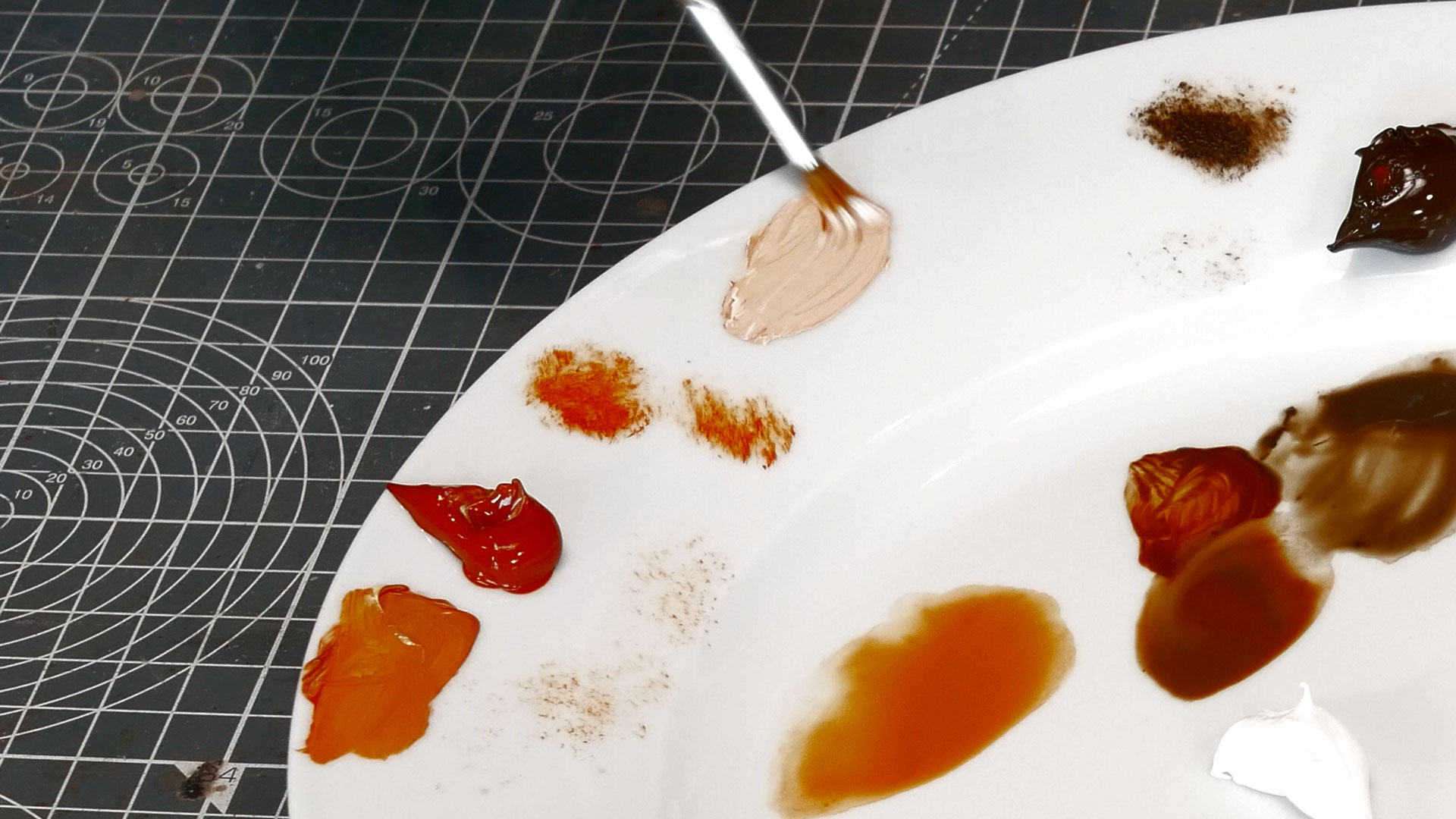
Even mixing white into black gives you a cold, unnatural grey—fine for a brutalist building in a galactic empire perhaps, but not great for weathered grime. Overall, white tends to create artificial-looking colours that don’t quite sell the dirt, dust, and decay we’re aiming for.
So yes—white can be used. Just do it with care and always consider whether buff titanium might be the better option (in my opinion, it almost always is).
Final Thoughts
These five colours—burnt sienna, raw umber, buff titanium, sap green, and black—are all you really need for most weathering projects. You can find them in standard artist ranges, so there’s no need to spend a fortune on specialist hobby paints. That’s a major bonus when you’re tackling large terrain builds.
All the pieces I’ve shown in this post are from my latest Kickstarter, The Training Grounds. It’s live now, and if you’re into modular sci-fi terrain, I think you’ll love it. I’ve linked it below—check it out and let me know what colours you rely on most when weathering your own projects!
https://www.kickstarter.com/projects/kathymillatt/the-training-grounds?ref=92z0kh